
First Time Homebuyer Guide for New Albany Buyers
June 11, 2026
June 11, 2026
Buying your first home can feel exciting one minute and overwhelming the next, especially when you are trying to figure out what is realistic in today’s market. If New Albany is on your list, the good news is that it still offers real starter-home opportunities, along with a strong sense of place and easy access to the Louisville area. This guide will walk you through what first-time buyers should know about pricing, financing, inspections, local factors, and next steps so you can move forward with more confidence. Let’s dive in.
New Albany remains one of the more approachable entry points in the river region for many first-time buyers. In April 2026, Redfin reported a median sale price of $225,883, with homes averaging about 68 days on market and about one offer per home. That points to a market that is active, but not so fast that every buyer is forced into a rushed decision.
Inventory also shows that first-time buyers are not limited to one type of home. Current listings under $250,000 include detached homes that are often 2- to 4-bedroom properties in roughly the 900 to 1,500 square-foot range, with examples around $180,000 to $249,900. Condo options are available too, with active 2-bed, 2-bath units ranging from about $150,000 to $274,900.
Recent sold homes support that same general price range. Redfin’s June 2026 sold data includes smaller homes closing around $199,000 to $230,000, which helps confirm that starter-home inventory in New Albany is not just theoretical. For many buyers, that makes the city worth a serious look.
New Albany sits just across the Ohio River from Louisville, and an Indiana University case study places it about four miles from downtown Louisville. The Sherman Minton Bridge carries I-64 and US 150 between Louisville and New Albany, which is a practical detail if you want access to Louisville without living in Kentucky. For many first-time buyers, that location is a major part of the appeal.
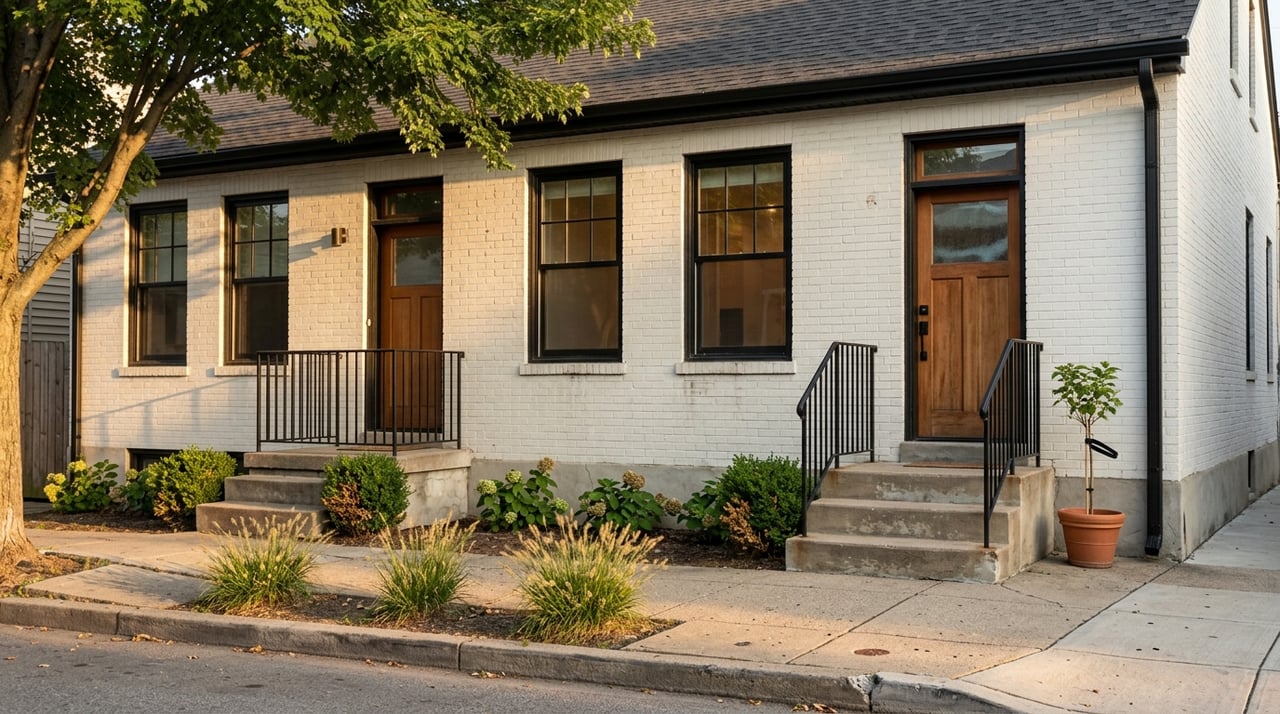
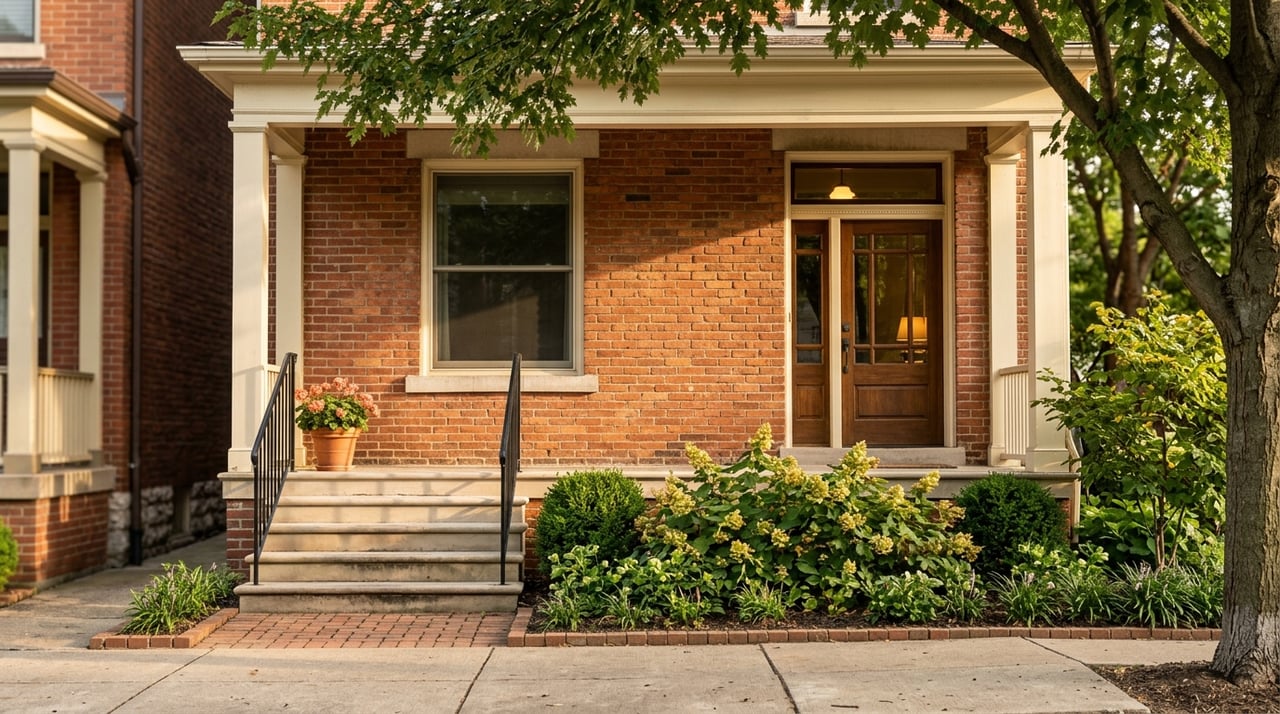
New Albany’s identity is closely tied to its historic riverfront core. City materials highlight historic resources such as the Downtown Historic District, Mansion Row Historic District, East Spring Street Historic District, Cedar Bough Place Historic District, and Cardinal Ritter Birthplace. If you like older homes, walkable streets, and established areas with character, New Albany offers a distinct feel.
That character also connects to outdoor access and everyday livability. The city notes that it is expanding the New Albany Shoreline and Ohio River Greenway through the South Monon Freedom Trail, and the parks system includes 16 recreation areas. Self-guided tree trails in Downtown, Midtown, and Mansion Row also reflect the city’s neighborhood-centered layout, with loops ranging from about 1.3 to 1.8 miles.
If you fall in love with an older home in a historic district, it is smart to ask questions early. New Albany’s Historic Preservation Commission notes that some exterior changes, demolition, moving a structure, or new construction may require a Certificate of Appropriateness. That does not mean you should avoid historic homes, but it does mean you should understand the rules before planning major updates.
Before you start touring seriously, get preapproved. The CFPB says sellers frequently require a preapproval letter before accepting an offer, and it can help you understand your budget before you get attached to a home. Just remember that a preapproval is tentative, not a final loan commitment.
Timing matters here too. Preapproval letters often expire after 30 to 60 days, so if your search stretches out, you may need to refresh your paperwork. That is normal, and it is one reason many first-time buyers benefit from staying organized from the start.
Once you have a specific home in mind, ask multiple lenders for Loan Estimates. The CFPB notes that you do not need a signed purchase agreement to request one, and multiple mortgage credit checks made within a 45-day window are generally treated as a single inquiry. Comparing estimates can help you see the full picture on rate, lender fees, and monthly cost.
Your purchase price is only part of the story. You will also want to plan for closing costs, insurance, taxes, and any monthly dues tied to the property. A home that seems affordable at first glance can feel different once the full monthly payment is clear.
Indiana property taxes are paid in arrears and are typically due in two installments, on May 10 and November 10. The state also notes that the homestead deduction is the most common deduction for owner-occupants and can reduce assessed value by the lesser of 60% of gross assessed value or $45,000. For first-time buyers, that makes it important to ask your lender how taxes will be handled in escrow and how they affect your monthly payment.
Some buyers may also qualify for help with upfront costs. IHCDA offers programs including First Step for first-time buyers and Next Home, which provides down payment assistance of 2.5% or 3.5% based on the purchase price. If cash to close is one of your biggest concerns, these programs are worth discussing early in the process.
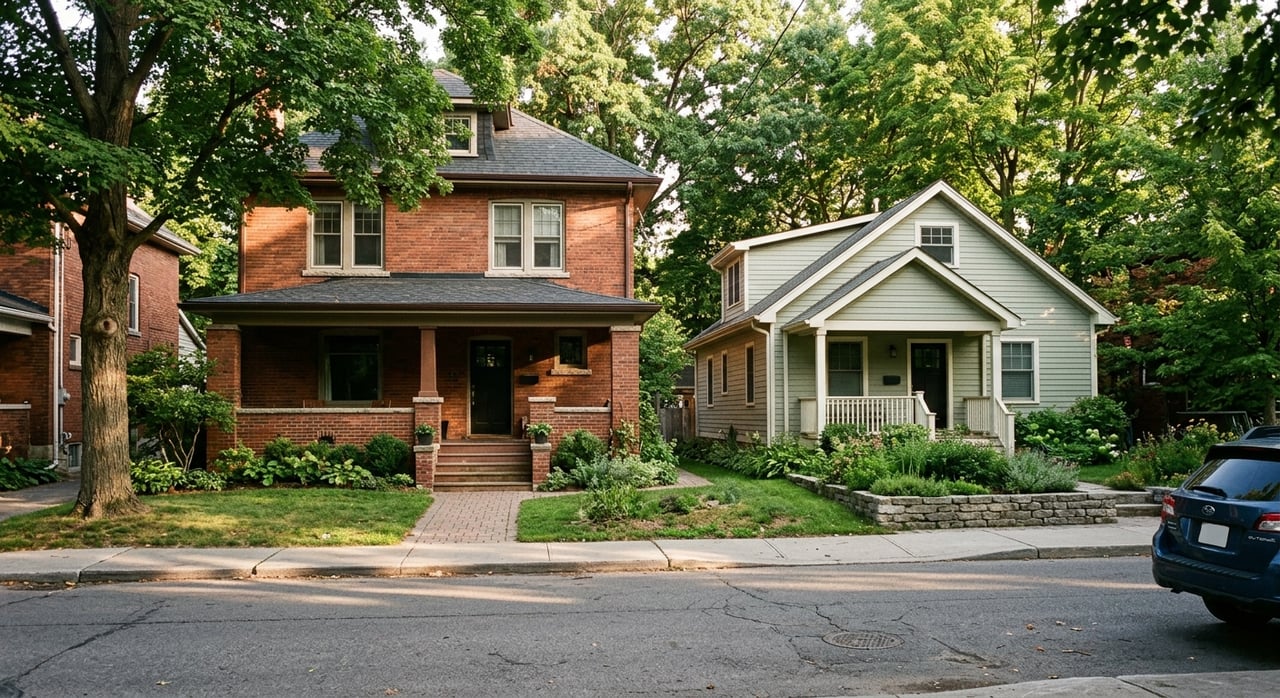
New Albany gives first-time buyers a real choice between condos and detached homes. That flexibility can be helpful if you are trying to balance budget, maintenance, and location. The best fit depends on how you want to live, not just the lowest list price.
A condo may offer a lower entry price in some cases, with current listings starting around $150,000. But the CFPB notes that condo loans can sometimes cost slightly more, and your lender needs accurate information about property taxes and any condo or HOA dues. Those added costs should be part of your budget from day one.
A detached home may give you more privacy, a yard, or more room to grow, but maintenance is usually more direct and immediate. In New Albany, many entry-level detached homes fall in a range that still works for first-time buyers, so it is worth comparing both options side by side.
When you tour homes in New Albany, look beyond paint colors and staging. Many first-time buyers are drawn to older homes because of the charm and location, but older properties can also come with more repair questions. Paying attention early can save you time and stress later.
Indiana generally requires sellers of 1-4 unit residential property to complete the Seller’s Residential Real Estate Sales Disclosure form before an offer is accepted. That form asks about roof problems, foundation issues, water or moisture concerns, floodplain status, flood insurance, HOA restrictions, and unpermitted additions, among other items. In a market with many older homes, that disclosure can be especially useful.
Still, the form is not a substitute for inspections. Use it as a starting point for better questions, not as your final answer.
Once you choose a home, schedule an independent inspection as soon as possible. The CFPB recommends doing this early, and if possible, attending the inspection so you can better understand what the inspector finds. That firsthand perspective can help you separate a routine maintenance item from a larger issue.
If the inspection turns up a problem, you may have options depending on your contract. The CFPB says buyers can negotiate repairs, ask for credits, or cancel if the contract allows it. This is one of the biggest reasons first-time buyers should avoid skipping due diligence just to move faster.
Flood review should be part of your New Albany buying checklist. Indiana DNR says floodplain status can be checked through local maps and the Indiana Floodplain Information Portal, and lenders may require flood insurance if a property is in an identified floodplain. That is a property-specific question, not something you should guess based on a broad city impression.
Floyd County’s surveyor office also points buyers toward the Letter of Map Amendment process if a property may be incorrectly mapped. At the same time, Redfin’s climate-risk panel flags New Albany as having severe flood risk, with 19% of properties at risk over the next 30 years. The takeaway is simple: verify the exact parcel before you buy.
After your offer is accepted, there are still several important steps between contract and closing day. The lender must send your Closing Disclosure at least three business days before closing. This gives you time to review final loan terms and compare them with your earlier Loan Estimate.
The CFPB also recommends reviewing the Closing Disclosure alongside the promissory note and any final walk-through items. During this phase, you should also shop for homeowner’s insurance and title insurance and stay alert to closing scams. If anything looks unfamiliar or rushed, slow down and ask questions.
If you want to keep the process manageable, focus on these steps:
Buying your first home in New Albany does not require you to know everything on day one. It helps to have a clear process, local perspective, and someone who can explain each step in plain language. If you are thinking about making your first move in Southern Indiana, Jessica Gooch can help you compare options, understand the process, and take the next step with confidence.
Stay up to date on the latest real estate trends.





Work with a dedicated real estate professional who understands your local market inside and out. With personalized guidance, expert negotiation skills, and in-depth area knowledge, you’ll have the confidence to make the right move. Whether buying or selling, you’ll get support tailored to your goals every step of the way.

Jessica Gooch
8002 New La Grange Rd Louisville KY 40222